
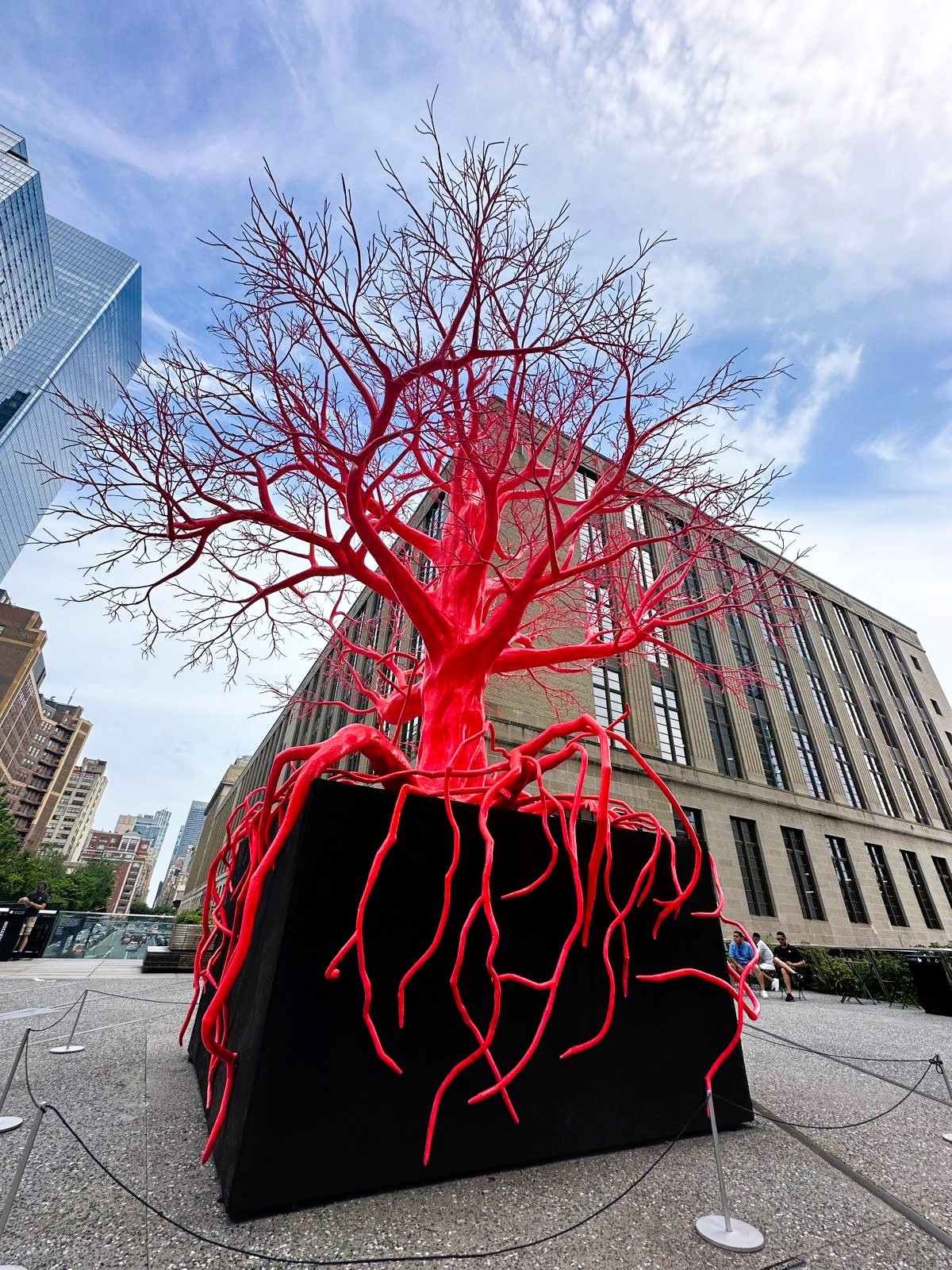
Pamela Rosenkranz’s latest creation on the High Line in New York City is turning heads and sparking conversation. The Swiss artist’s tree sculpture, a towering work of art, is a striking addition to the urban landscape. This unique installation blends seamlessly with its surroundings while challenging viewers’ perceptions of nature and artificiality in the heart of Manhattan’s Hudson Yards area.
The tree sculpture represents a bold step in public art, inviting passersby to pause and reflect on the relationship between the natural world and human-made environments. As visitors stroll along the elevated park, they encounter this thought-provoking piece that seems to blur the lines between reality and illusion. The artwork not only enhances the visual appeal of the High Line but also prompts discussions about environmental awareness and the role of nature in urban spaces.

The Concept Behind ‘Old Tree’
Symbolism of the Tree of Life
Pamela Rosenkranz’s “Old Tree” sculpture draws inspiration from the archetypal “tree of life” motif, symbolizing the connection between heaven and earth across various religions and mythologies. 1 The tree’s sanguine color evokes metaphors for the ancient wisdom of human evolution and a future where the synthetic becomes nature. 1
Blending of Natural and Synthetic Elements
Installed on the High Line, a contemporary urban park built on a relic of industry, “Old Tree” questions the boundaries between “artificial” and “natural” in post-industrial cities. [1, 10] The sculpture, made of man-made materials, aims to blur the lines between reality and illusion, prompting viewers to reflect on the relationship between the natural world and human-made environments. [1, 9]
Representation of Human Anatomy
The bright red-and-pink hues of “Old Tree” resemble the branching systems of human organs, blood vessels, and tissue, inviting viewers to consider the indivisible connection between human and plant life. 1 This anthropomorphic quality aligns with Rosenkranz’s artistic practice, which examines the human desire to understand surroundings by attributing human characteristics to them. [1, 10]
Installation and Technical Details
Fabrication Process
“Old Tree” was fabricated outside San Diego and transported across the country in two trucks. The sculpture arrived in pieces, consisting of a steel armature covered with spray foam carefully sculpted into delicate branches sealed with epoxy. Pamela Rosenkranz employed fabricated colors to reflect an unblemished and idealized nature, with color paramount in her artistic practice. 1
Assembly on the High Line
Each of the 16 limbs and six roots were meticulously assembled on-site, with the tree growing bit by bit as if planted there by Rosenkranz herself. The artist even covered the plinth with an earthy surface to resemble soil. The bold, reddish-pink color dramatically departs from the black-and-white hues of the sculpture’s predecessors and contrasts with the Hudson Yards skyscrapers towering above it.
Dimensions and Materials Used
Standing at an impressive height of 25 feet atop the Plinth, “Old Tree” is constructed from man-made materials. 1 Rosenkranz applied seven layers of the bright reddish-pink paint, akin to her canvas works, topped with a clear UV coating. The painted surface exhibits subtle drips and textural variations, lending a fleshy, bodily feel to the work, with the trunk resembling a muscular torso and the roots and branches evoking a delicate network of veins and capillaries.
Impact on the High Line Landscape
Contrast with Surrounding Architecture
Nestled between the skyscrapers and sitting atop a steel bridge, Pamela Rosenkranz’s “Old Tree” cultivates a synthetic artificial tree in hot neon pink, illustrating the branching-out systems of organs, blood vessels, and human body tissue. 3 The sculpture’s vibrant 25-foot-tall pink and red hues, constructed from man-made materials, create a striking contrast against the surrounding architecture of Hudson Yards. [2, 4] An artistic foreigner in a modern homeland, “Old Tree” bridges the urban and the rural, symbolizing the street-art metaphor of nature slowly being out of place in the ever-changing metropolis of man-made architecture. 3
Creation of a Social Space
The sculpture is designed to create a social space, providing shade and intriguing conversation spots. Made of man-made materials and standing at a height of 25 feet atop the Plinth, it provides a social space, creating shade while casting an ever-changing, luminous aura amid New York’s changing seasons. 1 “Old Tree comes alive on the High Line, amid the park’s foliage and the surrounding architecture,” says Rosenkranz. “I look forward to seeing how visitors further activate the sculpture.” [2, 5]
Visual Appeal and Visitor Reactions
The situation on the High Line invites people to linger with seating, allowing visitors to appreciate the sculpture’s visual appeal. Color is paramount for Rosenkranz, who employs fabricated colors to reflect unblemished and idealized nature. 1 Inspired by “Old Tree,” the High Line presented “Trees, Blood, and Circulatory Systems,” a poetry reading, as part of West Side Fest on September 30, 2023, showcasing the artwork’s ability to spark creative responses from visitors. 1
Pamela Rosenkranz’s “Old Tree” sculpture profoundly influences the High Line landscape, blending the natural with the synthetic in a thought-provoking manner. Its vibrant hues and unique design create a stark contrast against the urban backdrop, inviting visitors to pause and reflect on the relationship between nature and human-made environments. The artwork not only enhances the park’s visual appeal but also sparks conversations about environmental awareness and the role of nature in urban spaces.
This captivating installation serves as a testament to the power of public art to transform urban spaces and engage communities. By providing a social space and inspiring creative responses, “Old Tree” breathes new life into the High Line, offering a fresh perspective on the interplay between art, nature, and urban development. As visitors continue to interact with this striking piece, it will undoubtedly leave a lasting impression, encouraging ongoing discussions about the evolving relationship between humans and their environment in the heart of New York City.
The Plinth.
Opened in June 2019, the Plinth is an electrifying addition to the vibrant New York City art scene! Located on the Spur, on the High Line at 30th Street and 10th Avenue, this unique space has quickly become a must-visit destination for art enthusiasts and casual city wanderers alike. Imagine strolling along the High Line, surrounded by lush greenery and the dynamic energy of Chelsea, when suddenly you encounter a breathtaking, monumental sculpture. This is the magic of the Plinth—a dedicated space for a rotating series of new, contemporary art commissions that captivate and inspire. From sweeping city views to a thriving gathering space, the Plinth offers an unparalleled experience that merges urban life with artistic expression.
The Plinth’s debut was marked by the awe-inspiring “Brick House” by Simone Leigh in 2019. This towering sculpture immediately set the tone for what visitors could expect: groundbreaking, thought-provoking works that challenge perceptions and ignite conversations. Following Brick House, Sam Durant’s “Untitled (Drone)” took center stage in 2021, continuing the tradition of showcasing art that is not only visually stunning but also profoundly resonant with current socio-political themes. Most recently, in 2023, Pamela Rosenkranz’s “Old Tree” has taken place on the Plinth, enthralling visitors with its intricate details and evocative presence. Each artwork remains on display for 18 months, giving ample time for locals and tourists alike to engage with and reflect upon these monumental pieces.
What makes the Plinth truly special is its location on the High Line—a repurposed elevated rail line turned urban park that weaves through the heart of Chelsea. This historic neighborhood, known for its thriving arts scene and cultural landmarks, provides the perfect backdrop for such an innovative project. As you meander through the High Line, each step brings you closer to discovery, whether it’s an unexpected view of the city skyline or a captivating sculpture that seems to breathe life into the space around it. The Plinth transforms this remarkable setting into a living gallery, where contemporary art and urban beauty collide most spectacularly.
The Plinth is not just a static display; it’s a dynamic conversation starter that invites people from all walks of life to engage with contemporary art meaningfully. Its rotating series of sculptures ensures there is always something new to see and experience, making it a perpetual source of excitement and inspiration. Whether you’re an art lover or someone looking to explore Chelsea and the High Line, the Plinth offers an unforgettable encounter with some of the most monumental and thought-provoking art of our time. So next time you find yourself in New York City, carve out some time to visit this incredible space—you won’t regret it!
FAQs
- What is the colorful tree sculpture located on the High Line?
The sculpture known as “Old Tree” is part of the third High Line Plinth commission. Created by Pamela Rosenkranz, it is a vibrant red-and-pink piece that symbolizes the tree of life, a concept that traditionally links heaven and earth. - Can you describe the ‘Old Tree’ at Hudson Yards?
“Old Tree” is a striking 25-foot-tall sculpture in hues of pink and red, crafted from synthetic materials. It is designed to mimic the structure of human organs, blood vessels, and tissues, highlighting the interconnectedness of human life and nature. This artwork was conceived by Swiss artist Pamela Rosenkranz. - What is the significance of the red and pink tree in New York City?
The “Old Tree” is a 25-foot sculpture by renowned Swiss artist Pamela Rosenkranz, located on the High Line in New York City. It features 145 branches that evoke the imagery of both tree limbs and human blood vessels, blending elements of nature and human anatomy. - Where is the ‘Tree of Trees’ sculpture situated?
The ‘Tree of Trees’ sculpture stands outside Buckingham Palace, the Queen’s residence in London. This 21-meter-high artwork was crafted to promote the Queen’s Green Canopy initiative, which focuses on tree-planting efforts.
References
[1] – https://www.thehighline.org/art/projects/pamela-rosenkranz/
[2] – https://news.artnet.com/art-world/pamela-rosenkranz-old-tree-high-line-plinth-2296356
[3] – https://www.thehighline.org/videos/high-line-art/old-tree/
Read Also:
The Real History Behind the Rockefeller Tree
Top 11 Wellness Practices – The Healthy Habits of Artists in New York

