
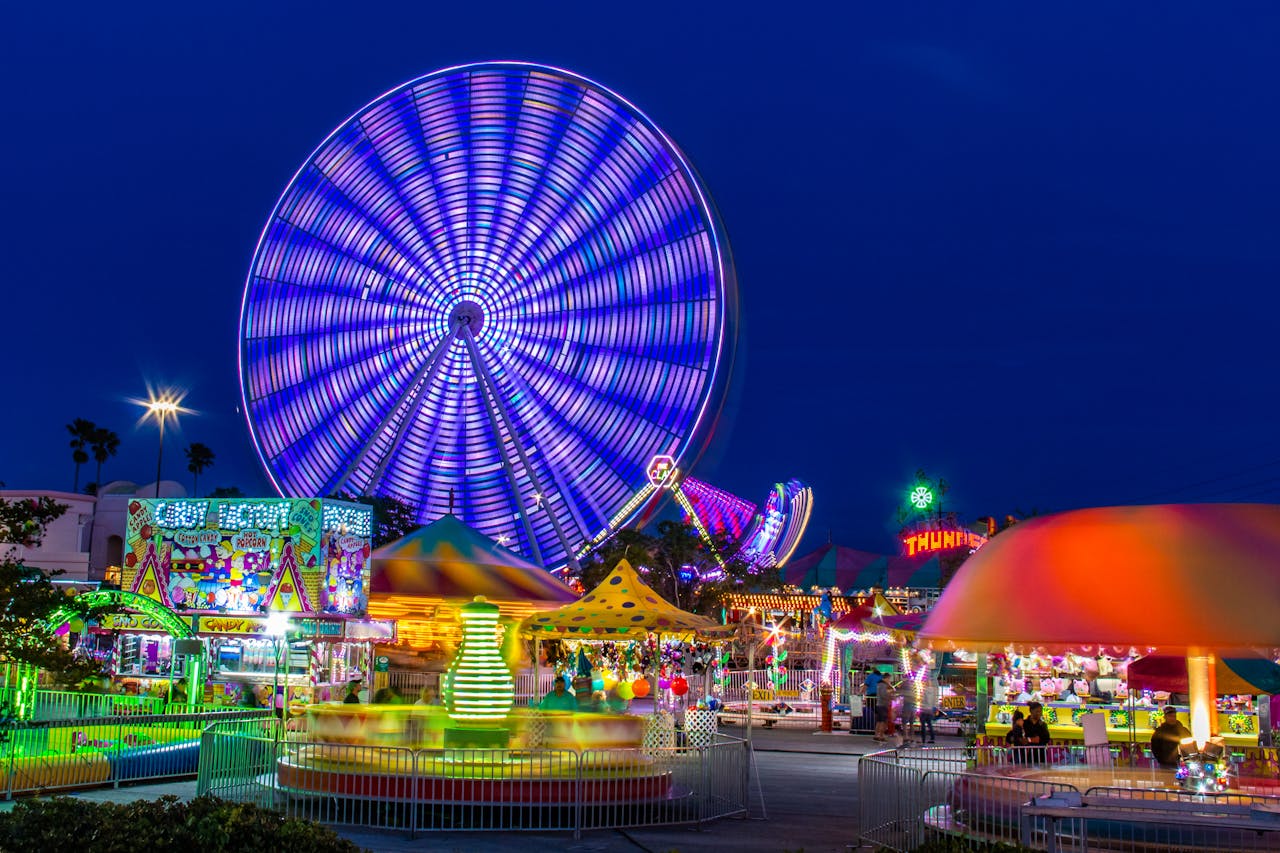
As visitors stepped into Luna Luna, the world’s first art amusement park making its grand return to New York City, a sense of wonder enveloped them. The exhibition, titled Forgotten Fantasy, invites exploration of a fantastical world filled with vibrant art and playful installations. Their journey began in Dalidom, a mesmerizing mirrored dome designed by Salvador Dalí. Overhead, one visitor exclaimed, “Where am I? I’m trying to find myself,” a sentiment that resonated deeply, reflecting the essence of Luna Luna: a place that blurs the lines between art, nostalgia, and self-discovery.
Walking through this immersive experience at The Shed in Manhattan, attendees felt both joyfully nostalgic and exhilaratingly lost. They marveled at a Keith Haring-designed carousel that whirred to life, stumbled through a Roy Lichtenstein-inspired glass labyrinth, and danced under the branches of David Hockney’s Enchanted Tree. Each installation beckoned with a sense of magic and whimsy, reminding visitors of the joy of childhood while challenging their perceptions of reality. Running through until January 5, 2025, with tickets starting at $44, the amusement park stands out as one of the most exciting art exhibitions to grace New York this year.
Origins of Luna Luna
The story of the amusement park began in 1987, when artist and peace activist André Heller first introduced the concept in Hamburg, Germany. That summer, the park attracted 300,000 visitors, featuring works from renowned artists like Sonia Delaunay and Jean-Michel Basquiat. Delaunay’s geometric entrance welcomed guests, while Basquiat designed a Ferris wheel accompanied by the soulful sounds of Miles Davis’s Tutu. Heller’s vision included an inclusive wedding chapel, symbolizing a radical approach to love and community at a time when marriage was often restricted.
Heller’s dream was to create a world tour of this avant-garde amusement park, but it faced significant hurdles. Legal battles and logistical challenges led to the park’s installations being packed away in 44 shipping containers, eventually abandoned in the Texas desert. For decades, these artworks were forgotten, overshadowed by the art world’s rapid evolution. It wasn’t until entrepreneur Michael Goldberg discovered the containers that a revival became possible, culminating in a reimagined amusement park that brings joy and art back to the forefront of the cultural landscape.
Art as a Form of Resistance
The revival of Luna Luna is not just about nostalgia; it also carries a profound message rooted in history. Heller designed the park as a means to navigate and combat an endangered world, a sentiment that resonates powerfully today. The original Luna Luna emerged in the aftermath of World War II, a time when art served as a tool for questioning societal values. The exhibit reflects a strong anti-fascist tone, recalling the dark history of the Nazis who once condemned modern art.
Among the noteworthy installations is Daniel Spoerri’s Crap Chancellery, a cheeky rebuke to Adolf Hitler’s regime, featuring sculptures that offer grim humor and commentary on power. Spoerri’s work serves as a poignant reminder of the struggles faced by artists during oppressive times. The presence of these historical pieces within the vibrant atmosphere of the amusement park creates a powerful juxtaposition, inviting visitors to reflect on the past while celebrating the present.
Luna Luna: Intersection of Art and Play
At its core, Luna Luna represents the intersection of art and play, encouraging attendees to engage with creativity in unconventional ways. While modern adaptations have altered some experiences—such as rides that cannot be taken—visitors can still immerse themselves in the art through interactive installations, pop-up performances, and even spontaneous weddings. This blurring of boundaries between artist and audience creates an environment where everyone can participate in the magic of the experience.
As Heller himself articulated, “Art should come in unconventional guises and be brought to those who might not ordinarily seek it out in more predictable settings.” This ethos is fully realized at Luna Luna, where joy, imagination, and artistic expression converge.
Frost Fest: A Winter Wonderland at Luna Park, Coney Island

